2018 Blue Distinction® Center for Maternity Care designation by Blue Cross Blue Shield. The Blue Distinction Specialty Care program recognizes nationally designated health care facilities that show expertise in delivering improved patient safety and better health outcomes.
2018 Blue Distinction® Center for Bariatric Surgery
2018 Blue Distinction® Center for Bariatric Surgery designation by Blue Cross Blue Shield. The Blue Distinction Specialty Care program recognizes nationally designated health care facilities that show expertise in delivering improved patient safety and better health outcomes.
2016 Silver Award for the Workplace Partnership for Life
2016 Silver Award for the Workplace Partnership for Life campaign, presented by the Health Resources & Services Administration’s (HRSA), a national initiative that spreads the word about organ donation.
2016 Blue Distinction® Center for Maternity Care
2016 Selection as a Blue Distinction® Center for Maternity Care by Anthem Blue Cross signifying that Natividad delivers high quality maternity care safely and effectively, based on objective quality measures that represent evidence-based practices of high quality maternity care.
2016, 2015, 2014 and 2012 Award for Sustained Excellence
2016, 2015, 2014 and 2012 Award for Sustained Excellence in Reducing Hospital Acquired Pressure Ulcers presented by CALNOC (the Collaborative Alliance for Nursing Outcomes), the leading provider of actionable information and research on nursing sensitive quality indicators.
CLINICAL ASSOCIATE PROFESSOR OF MEDICINE, PRIMARY CARE AND POPULATION HEALTH
STANFORD UNIVERSITY SCHOOL OF MEDICINE
This will be a review summarizing the potential medical benefits of marijuana, as well as the risks associated with medical and recreational marijuana use.
Desired Outcomes:
Assess evidence-based usage of marijuana for medical purposes.
Counsel to patients who wish to use marijuana for medical conditions
Recognize dangers of marijuana, particularly for younger patients.
Presented By: Vinod K. Dhawan, MD, FACP, FRCP, CHIEF OF INFECTIOUS DISEASES, RANCHO LOS AMIGOS NATIONAL REHABILITATION CENTER, CLINICAL PROFESSOR OF MEDICINE, DAVID GEFFEN SCHOOL OF MEDICINE AT UCLA
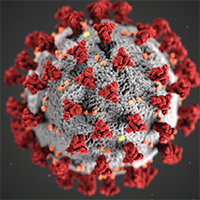
“Current Situation: The World Health Organization (WHO) and Centers for Disease Control and Prevention (CDC) are monitoring an outbreak of respiratory illness caused by 2019 novel coronavirus (2019-nCoV) in Wuhan City, China. To date there have been over 500 cases including 17 deaths, primarily among individuals living in or traveling to the Wuhan area. A limited number of cases have been reported in Thailand, Japan, and South Korea. There has been one case in the United States in an individual who had recently traveled to Wuhan. While transmission dynamics are still being characterized, there is evidence suggesting person-to-person transmission of the virus. Airport screening of travelers arriving from Wuhan was initiated on January 17th. Though the risk of infection with 2019-nCoV is very low for the average Californian at this time, Monterey County Health Department urges all providers to take steps now to be able to identify, isolate, and report individuals potentially ill with 2019-nCoV.” 1/23/2020 Health Advisory, Edward Moreno, MD, MPH, Monterey County Health Office & Director of Public Health
Desired Outcomes:
Describe the origin and current status of ongoing 2019-Novel Coronavirus outbreak.
Review the clinical presentation, diagnosis, and management of 2019-Novel Coronavirus infection.
Cite the CDC recommendations for patient isolation, infection control, and international travel related to 2019-Novel Coronavirus outbreak.
Discuss the current strategies to contain 2019- Novel Coronavirus outbreak.
Outline the culturally relevant aspects of 2019-Novel Coronavirus infection.
Presented By: Courtney Wusthoff, M.D., MS, NEUROLOGY DIRECTOR, LPCH NEURO NICU, ASSISTANT PROFESSOR OF NEUROLOGY & NEUROLOGICAL SCIENCES AND BY COURTESY, PEDIATRICS‐ NEONATAL AND, DEVELOPMENTAL MEDICINE, STANFORD DIVISION OF CHILD NEUROLOGY, STANFORD UNIVERSITY SCHOOL OF MEDICINE
Neonatal Neurology is an area rarely included in pediatric or neurology training programs, but is a common reason for hospitalization among newborns. This activity will educate on the initial approach to the most common neonatal neurology problems.
Desired Outcomes:
Recognize neurological problems unique to newborns and infants
Identify features warranting further evaluation for newborns with abnormal head size
List diagnostics to consider for evaluation of microcephaly
Distinguish between hypotonia and encephalopathy
Determine the initial diagnostic steps for suspected neonatal seizures.
Presented By: Clifford Charles Sheckter, MD, DIVISION OF PLASTIC & RECONSTRUCTIVE SURGERY, STANFORD UNIVERSITY SCHOOL OF MEDICINE
This educational activity will focus on the diagnosis, triage, and treatment of burn injuries for non-burn providers. After completion, participants will have a good understanding of burn depth and how to diagnose depth based on exam. They will also understand how to diagnose burn size with simple and reliable means. Participants will appreciate criteria for transfer to burn centers and understand how to start resuscitation if indicated. Finally, participants will learn of topical treatments (new and old) for burn injuries and appreciate how to care for burn patients when indicated.
Desired Outcomes:
Accurately diagnose burn depth.
Accurately diagnose burn size.
Diagnose and treat inhalation injury.
Explain triage of burned patients to burn centers.
Explain resuscitation of severely burned patients.
Presented By: Marina Basina, M.D., CLINICAL ASSOCIATE PROFESSOR, DIVISION OF ENDOCRINOLOGY, GERONTOLOGY AND METABOLISM, STANFORD UNIVERSITY SCHOOL OF MEDICINE
Review of the targets for Glycemic control in critically ill patients, evolution of the targets, major studies on hyperglycemia therapy in critical care settings with outcomes. Utilization of electronic medical records and order sets.
Desired Outcomes:
Review the literature comparing modern Electronic Glycemic
Review the latest technologies for glycemic management in critically ill patients.
Analyze outcome data on patients managed with Electronic Glycemic Management Systems
Presented By: Sandra Leigh Bardas, BSP, RPh, FCSHP, CONSULTANT PHARMACIST, PHARMACIST MEMBER OF THE FEDERAL DISASTER MEDICAL ASSISTANCE TEAM (DMAT-CA-6) AND THE SF BAY AREA UNIT OF CAL-MAT
The focus will be on specific missions to accomplish a stated need during a disaster. With this table top practice, attendees will feel more confident in a disaster response.
Desired Outcomes:
List the four phases of emergency management.
Identify actions necessary for emergency preparedness.
Demonstrate organizational skills to set up and maintain a mission specific disaster response system.
Formulate essential personal and professional actions necessary for a disaster response.
Describe the differences in priorities between practices in a disaster setting and routine practices in a healthcare setting.
Outline necessary steps to transition from a disaster setting which treatment is based upon the principles of triage to a sustained response as infrastructure is restored.



 On-Call List
 Physician Privileges
 Safety Data Sheets (SDS)
 Workplace Violence Reporting


 On-Call List
 Physician Privileges
 Safety Data Sheets (SDS)
 Workplace Violence Reporting